
Application: Magic Squares (P99555)
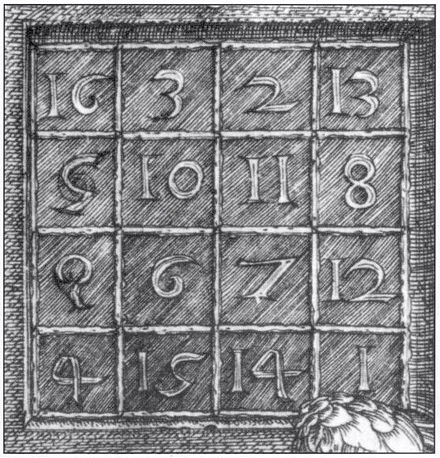
This lesson presents a solution to the problem P99555 from Jutge, which consists of determining whether certain arrangements of numbers constitute magic squares or not. The solution to this problem involves matrices and lists.
Magic Squares
An
The Problem
The problem consists of reading a sequence of squares of variable size and stating, for each of them, whether it is magic or not.
In the input, each square starts with its number of rows and columns yes and when it is not, no.
For example, for the input
3
1 6 8
5 7 3
9 2 4
4
4 5 16 9
14 11 2 7
1 8 13 12
15 10 3 6
the output should be
no
yes
Check why.
Program Structure
It is obvious that solving this problem calls for creating a function that, given a square, indicates whether it is magic or not. This function could have the following header and specification:
def is_magic_square(q):
    """Indicates whether q is a magic square or not."""
The type Square will represent square matrices of numbers and is given by this type definition:
Square = list[list[int]]With this, we can already set up a main program that reads squares and writes whether they are magic or not:
from yogi import read, tokens

def main():
    for n in tokens(int):
        q = [[read(int) for _ in range(n)] for _ in range(n)]
        print('yes' if is_magic_square(q) else 'no')
While values of n can be read with tokens, n^2 integers are read and stored in a matrix q of size n × n, for which the result is printed using the function is_magic_square.
Function to Determine the Property
Now we need to do the most essential part: write the function is_magic_square that indicates whether a square matrix of size n × n is magic or not. To do this, two conditions must be ensured:
- All its values are between 1 and
n^2and there are no repeats. - The sum of the values of each row, each column, and each diagonal are equal.
We could then decompose is_magic_square into two new functions good_values and equal_sums that indicate the result of the first and second condition respectively:
def is_magic_square(q):
    """Indicates whether q is a magic square or not."""

    return good_values(q) and equal_sums(q)
The function good_values must first check that all values are between 1 and n^2: this can be easily done by searching for an incorrect value through all rows and columns. Then, it must check that there are no duplicates: this can be done in many ways. One of them is to create a list seen of n^2 + 1 booleans, so that seen[i] indicates whether the number i is in the matrix or not (position zero is not used). At the beginning, no element is seen. Then, for each element x of the matrix, if it has not been seen yet, it is marked as seen. If it has already been seen, it means that element is repeated.
def good_values(q):
    n = len(q)
    # check that all values are between 1 and n^2
    for i in range(n):
        for j in range(n):
            if not 1 <= q[i][j] <= n*n:
                return False
    # check that there are no repeated elements
    seen = [False for _ in range(n * n + 1)]
    for i in range(n):
        for j in range(n):
            x = q[i][j]     # we already know 1 <= x <= n*n, so the following accesses are safe
            if seen[x]:
                return False
            seen[x] = True
    # at this point, it has passed all checks
    return True
The function equal_sums must check if the sum of the values of each row, each column, and each diagonal are equal. To do this, you can first calculate the sum of the elements of the first diagonal. Then, check that the sum of the elements of the second diagonal and of each row and column match:
def equal_sums(q):
    n = len(q)
    # find sum of first diagonal
    total = sum([q[i][i] for i in range(n)])
    # check sum of second diagonal
    if total != sum([q[n - i - 1][i] for i in range(n)]):
        return False
    # check sums of each row i
    for i in range(n):
        if total != sum(q[i]):
            return False
    # check sums of each column j
    for j in range(n):
        if total != sum([q[i][j] for i in range(n)]):
            return False
    # at this point, it has passed all checks
    return True
And the complete program is this:
from yogi import read, tokens

Square = list[list[int]]

def main():
    for n in tokens(int):
        q = [[read(int) for _ in range(n)] for _ in range(n)]
        print('yes' if is_magic_square(q) else 'no')

def is_magic_square(q):
    """Indicates whether q is a magic square or not."""

    return good_values(q) and equal_sums(q)

def good_values(q):
    n = len(q)
    # check that all values are between 1 and n^2
    for i in range(n):
        for j in range(n):
            if not 1 <= q[i][j] <= n*n:
                return False
    # check that there are no repeated elements
    seen = [False for _ in range(n * n + 1)]
    for i in range(n):
        for j in range(n):
            x = q[i][j]     # we already know 1 <= x <= n*n, so the following accesses are safe
            if seen[x]:
                return False
            seen[x] = True
    # at this point, it has passed all checks
    return True

def equal_sums(q):
    n = len(q)
    # find sum of first diagonal
    total = sum([q[i][i] for i in range(n)])
    # check sum of second diagonal
    if total != sum([q[n - i - 1][i] for i in range(n)]):
        return False
    # check sums of each row i
    for i in range(n):
        if total != sum(q[i]):
            return False
    # check sums of each column j
    for j in range(n):
        if total != sum([q[i][j] for i in range(n)]):
            return False
    # at this point, it has passed all checks
    return True

if __name__ == '__main__':
    main()
The all and any Functions
Given a list of booleans, the built-in function all indicates if all are true. Similarly, given a list of booleans, the built-in function any indicates if any is true. For example:
>>> all([True, True, False])
False
>>> all([True, True, True])
True
>>> all([])
True
>>> any([False, False, True])
True
>>> any([])
False
These functions are very useful when passed a list comprehension. For example, to check that all values are between 1 and n^2 in the function good_values, you could do
    if not all([1 <= q[i][j] <= n*n for i in range(n) for j in range(n)]):
        return False
instead of
    for i in range(n):
        for j in range(n):
            if not 1 <= q[i][j] <= n*n:
                return False
as we did before.
Similarly, to check if any of the sums of the rows is different from total in equal_sums, you could do
    if any([sum(row) != total for row in q]):
        return False
instead of
    for i in range(n):
        if total != sum(q[i]):
            return False
And, using the same idea, the whole function could be rewritten like this:
def equal_sums(q):
    n = len(q)
    total = sum([q[i][i] for i in range(n)])  # sum of first diagonal
    return total == sum([q[n - i - 1][i] for i in range(n)]) \  # sum of second diagonal
        and all([sum(row) == total for row in q]) \    # sums of rows
        and all([sum([q[i][j] for i in range(n)]) == total for j in range(n)])  # sums of columns
Note: I leave it with list comprehensions and not generators to avoid complicating things further.